


Case Study: Wild Mile, Chicago – Restoring Urban Rivers Through Nature-based Solutions
โพสต์เมื่อ : 8 เม.ย 2569 เวลา 13:56 น.
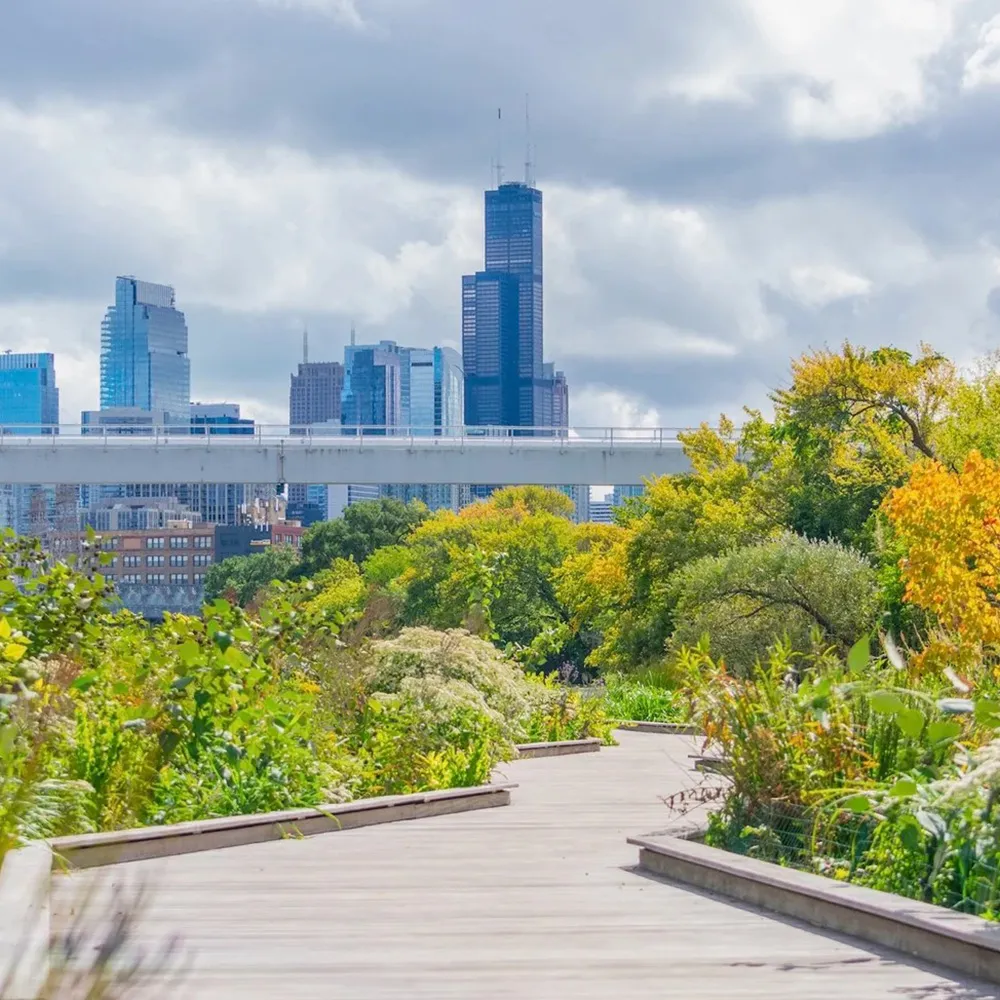
The Wild Mile in Chicago is a pioneering example of a floating eco-park that was designed not only as an attractive public space but also as a large-scale ecological restoration project. At the heart of the project is the use of coconut coir, a natural material that plays a vital role in rebuilding aquatic ecosystems while supporting native vegetation.
Located along the North Branch Canal of the Chicago River, the 17-acre (approximately 6.9 hectares) project transforms a former industrial waterfront into a thriving wildlife corridor. Once dominated by concrete embankments and steel infrastructure, the area has been reimagined as a living ecosystem that reconnects the river with nature and the surrounding community.
Located along the North Branch Canal of the Chicago River, the 17-acre (approximately 6.9 hectares) project transforms a former industrial waterfront into a thriving wildlife corridor. Once dominated by concrete embankments and steel infrastructure, the area has been reimagined as a living ecosystem that reconnects the river with nature and the surrounding community.
Launched in 2016, the project was developed through a collaboration between Urban Rivers, Skidmore, Owings & Merrill (SOM), and numerous public and private partners. Guided by the Wild Mile Framework Vision, the project embraces Nature-based Solutions (NbS) through a modular floating landscape system that can be expanded over time to meet community needs and available funding.
Transforming Grey Infrastructure into Living Shorelines
One of the project's primary challenges was the Chicago River's hardened shoreline, where steel sheet piles and concrete retaining walls had severed the ecological connection between land and water. Instead of replacing these structures with more engineered solutions, Wild Mile introduced a series of floating green archipelago buffers that restore natural habitat while improving environmental performance.
The project achieves multiple objectives simultaneously:
- Habitat Restoration – More than 50 native plant species, totaling over 10,000 individual plants, provide food, shelter, and breeding habitats for fish, birds, insects, and other wildlife.
- Improved Water Quality – Plant root systems naturally filter pollutants, absorb nutrients, and help mitigate stormwater runoff through biological processes.
- Biodiversity Enhancement – Ecological monitoring has documented significant increases in native fish populations, aquatic invertebrates, and zooplankton, demonstrating measurable improvements in river health.
Connecting People with Nature
Wild Mile is more than an environmental restoration project—it is also a vibrant public space that reconnects urban communities with the river.
Visitors can enjoy kayaking, environ
Visitors can enjoy kayaking, environ